Guided Entry
A chamfered tip guides the reamer into a pre-drilled cavity.

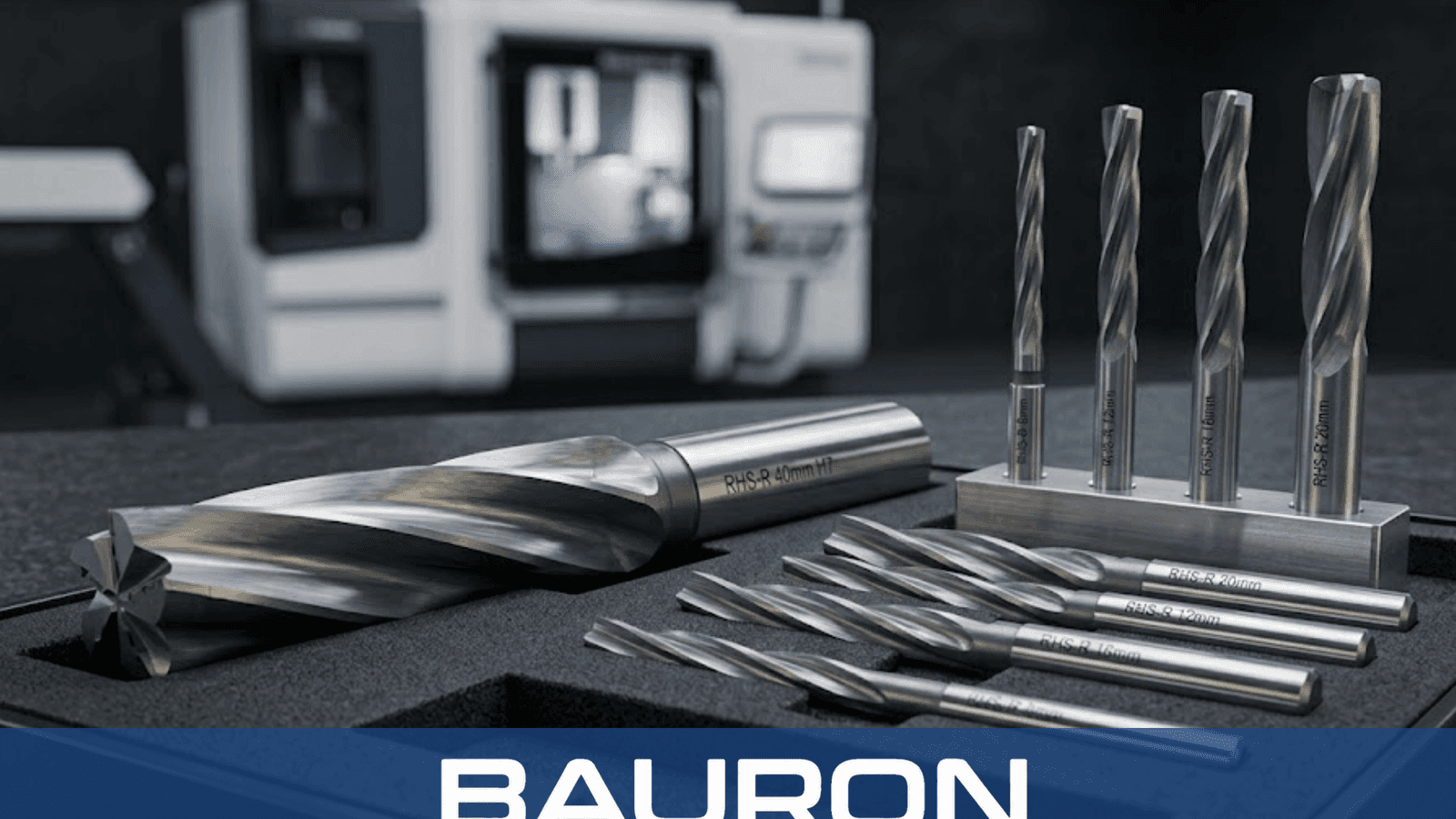
A right-hand spiral-fluted reamer is a finishing tool used to size blind holes. Its flute direction carries cut material upward toward the shank, helping limit chip packing at the bottom of a non-through hole.
A chamfered tip guides the reamer into a pre-drilled cavity.
Clockwise rotation shears material from the internal walls.
Right-hand spiral flutes pull chips upward toward the shank.
Continuous cutting pressure supports an accurate, polished internal diameter when the tool and process are correctly matched.
Augers chips upward to help reduce packing in blind holes.
Supports a free-cutting action with reduced cutting pressure.
Support tight diametrical tolerances for part mating.
Distribute radial forces around the bore to support roundness.
Helps resist deflection in deep holes.
Supports aligned entry into the workpiece.
| Specification | Range / Details |
|---|---|
| Diameter Range | 1/16" to 2"; standard and metric sizes available |
| Flute Geometry | Right-hand spiral, right-hand cut |
| Number of Flutes | 4 to 8, depending on tool diameter |
| Shank Type | Straight, Morse taper, or Weldon |
| Tolerance | H7 standard or custom precision-ground |
| Application Type | Primarily blind holes |
| Material / Coating | Best For | Key Advantage |
|---|---|---|
| HSS (High-Speed Steel) | Mild steel and general blind-hole applications. | An economical option with toughness for standard applications. |
| Solid Carbide | Abrasive materials and CNC production. | Provides high rigidity and wear resistance. |
| TiAlN Coating | High-temperature and dry machining. | Protects the cutting edge and can extend tool life. |
HSS provides toughness for general blind-hole work, solid carbide adds rigidity for production and abrasive materials, and TiAlN can protect the cutting edge in high-temperature or dry machining.
Use rigid holders for automated blind-hole finishing.
Mount reamers in turrets for internal-diameter sizing on rotating parts.
Pair the reamer with controlled manual or automated feed for vertical cutting.
Pulls chips upward and out to help prevent packing at the bottom of deep, non-through holes.
Sizes press-fit pin cavities while carrying restrictive debris away from the base.
Reams dead-end oil galleries and fluid passages.
Continuously removes chips in cast aluminum or iron to help limit wall scoring.
A right-hand spiral reamer pulls chips upward and out, making it suited to blind holes. A left-hand spiral reamer pushes chips forward and is generally used for through-holes and interrupted cuts.
It can be used in some through-hole applications, but its flute direction pulls chips toward the spindle and may drag them across the finished surface. A left-hand spiral or straight-flute reamer is generally preferred.
With right-hand spiral and right-hand rotation, the positive axial rake creates a free-cutting shearing action that can reduce thrust force and draw the tool slightly into the cut.
The source recommends solid carbide with a TiAlN coating for high-volume production because the combination provides rigidity and heat resistance for maintaining tight tolerances.
Bauron can manufacture reamers to specified diameters, lengths, shank requirements, and blueprint tolerances.
Bauron provides design and engineering support for custom geometries, coatings, diameters, lengths, shanks, and tolerances. Share the application and blueprint requirements for technical review.
Talk to Engineering