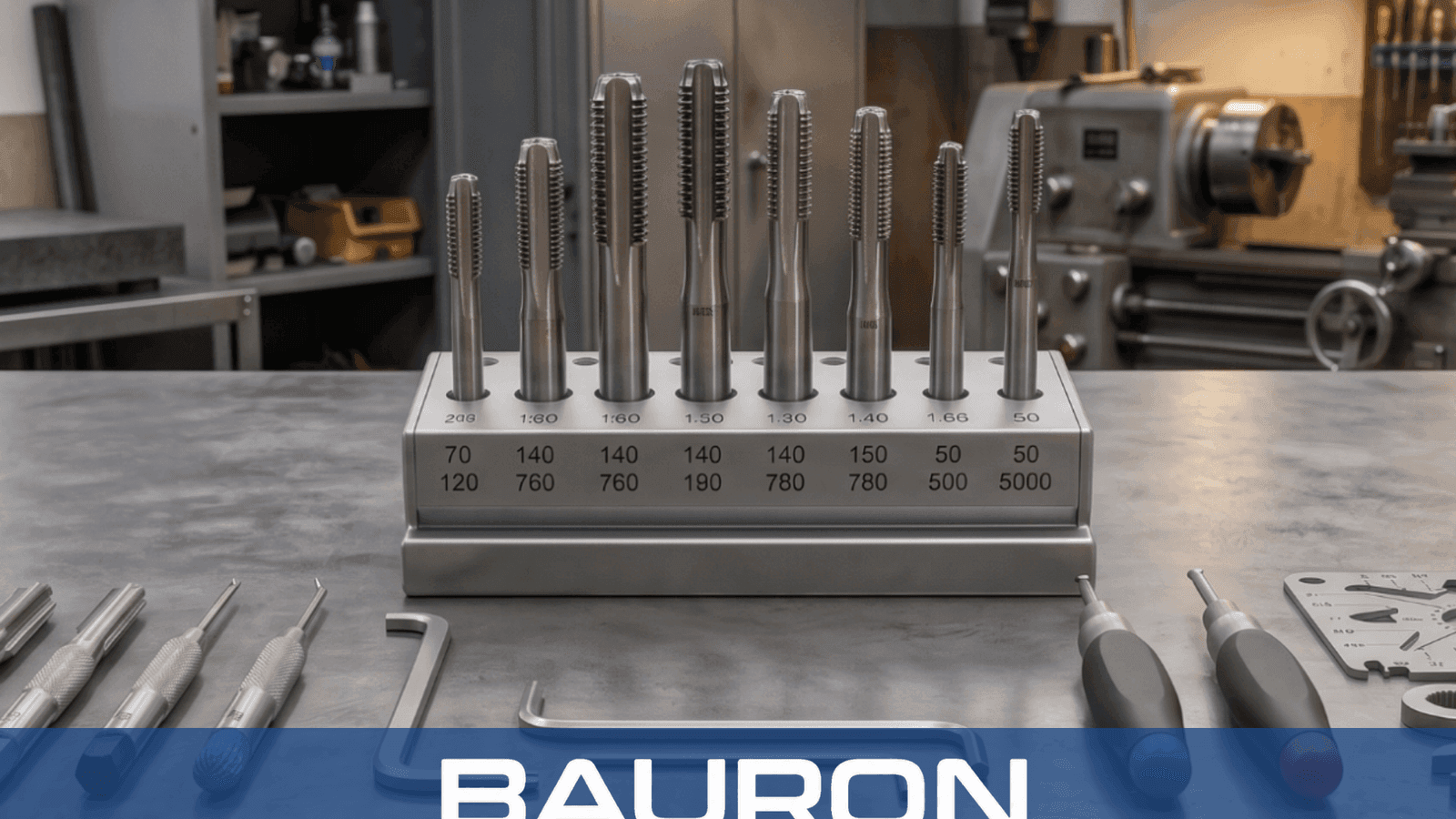
Pilot Drilling
The leading drill point produces the pilot diameter required by the integrated tap section.

Combination machine taps combine pilot drilling, internal thread cutting, and entrance chamfering on one tool body. They are intended for controlled through-hole operations where the drill point can clear the workpiece before the full tapping section engages.
The leading drill point produces the pilot diameter required by the integrated tap section.
As the tool advances, the threaded cutting section follows the drilled pilot and generates the internal thread.
An integrated step or bevel can deburr and chamfer the hole entrance as part of the cycle.
A synchronized tapping cycle reverses rotation and feed to withdraw the threaded section after reaching programmed depth.
Combining drilling, tapping, and entrance finishing can shorten cycle time in suitable through-hole parts.
One tool can save magazine positions and reduce non-cutting tool-change time.
The integrated drill and tap sections support consistent hole-to-thread alignment when run in a rigid, low-runout setup.
The drill-to-tap spacing is designed so the pilot hole can break through before the full thread-cutting section engages.
Application-specific coatings can reduce friction and wear during combined drilling and tapping.
| Specification | Range / Details |
|---|---|
| Diameter Range | #4 to 1/2"; metric M3 to M12 in selected configurations |
| Thread Forms | UNC, UNF, metric, and custom pitches |
| Flute Geometry | Spiral point or short spiral flute |
| Shank Type | Straight cylindrical, 1/4" hex, or machine shank |
| Operation Type | Through-hole drilling, tapping, and entrance chamfering |
| Material Thickness | Common starting guideline: no greater than the nominal tap diameter; verify against the exact tool geometry |
| Material / Coating | Best For | Key Advantage |
|---|---|---|
| HSS (High-Speed Steel) | Mild steel, aluminum, brass, and compatible plastics. | Impact toughness supports general drilling and tapping where cutting loads change along the tool. |
| Cobalt (HSS-Co) | Stainless steel and higher-strength alloys. | Improved hot hardness helps resist edge breakdown in tougher materials. |
| TiN / TiAlN Coating | Production drilling and tapping in compatible materials. | A suitable coating can reduce friction, limit galling, and improve wear resistance. |
The drill point and tap section encounter different cutting conditions, so substrate, coating, coolant, workpiece thickness, and synchronized machine parameters must be evaluated together.
Use rapid positioning and synchronized spindle control for consolidated hole-making cycles.
Run rigid tapping programs that combine pilot drilling and threading with one tool.
Integrate combination tooling into dedicated multi-spindle or transfer-line production.
Drills and threads through holes in compatible electrical enclosures, panels, and frames.
Reduces tool changes in repeated bracket and housing production.
Combines operations on CNC drill-tap machines when the tool tip has clearance beyond the workpiece.
Conserves tool-magazine positions by replacing separate drill, tap, and chamfer tools in suitable parts.
Typical combination drill-and-tap geometry is intended for through holes because the drill point must clear the material before the tapping section completes the thread. A blind-hole application requires a purpose-designed tool and verified clearance.
A common starting guideline limits thickness to about the nominal tap diameter, but the actual limit is set by drill-point length, drill-to-tap spacing, chamfer length, breakthrough clearance, and the workpiece material.
The machine must support controlled drilling and synchronized tapping with reversal. Program feed, speed, transition depth, and withdrawal to the toolmaker's data and the exact thread pitch.
A standard tap requires a separately drilled pilot hole and may be followed by a chamfering tool. A combination tool can consolidate those operations, with the actual cycle-time reduction depending on part geometry, machine acceleration, and existing tool-change time.
Bauron can review non-standard pitches, drill-point lengths, tap-to-drill spacing, step chamfers, shanks, substrates, and coatings for a specific through-hole application.
Bauron provides design and engineering support for drill-point geometry, drill-to-tap spacing, thread pitches, chamfer steps, shanks, substrates, and coatings. Share the part section and machine cycle for technical review.
Talk to Engineering